WATER AS EDITOR: INFLOWS
In the previous session, we wrote plant names on sidewalk. Rain subsequently erased those marks—performing editorial or collaborative actions on the plant names. In this session called “INFLOWS,” we will go deeper into exploring how water—and other more-than-humans—might perform the roles of editor or collaborator on human-produced texts.

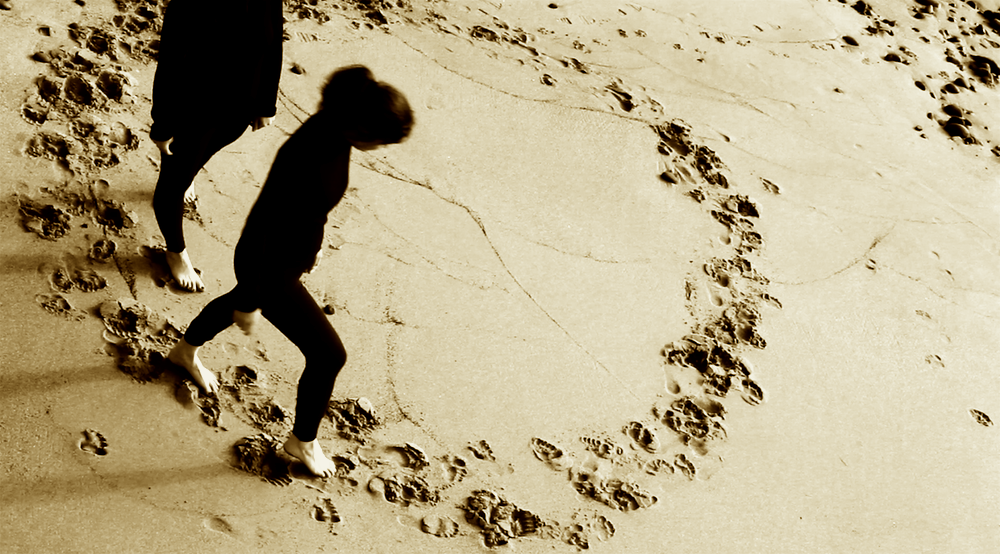
Consider the temporally distinct actions of geomorphology—where magma, precipitation, and glaciers revise previous geologic expressions. Consider the rain from our (W)RITE in REBEL BOTANY as an editor, remarking on the sidewalk chalk we temporarily inscribed. Consider the ruderal plant species’ revision of asphalt and concrete; could this be interpreted as feedback on the imposition of a sidewalk as human inscription on the land?
Whether one describes these actions through the lenses of reading, writing, interpreting, editing, or composing, the relation creates the interplay between these different agents.
As an attempt to attune to large weather systems circulating over the North Atlantic Ocean, I considered how I might relate my own body to a weather body. What do we have in common? Movement. I noted these large bodies circulate counterclockwise and began my own counterclockwise walking as a way to come into an embodied relation with these weather systems.
I also noted where these weather systems would touch land, and I followed their lead to the foreshore. There, wet sand exposed at low tide offered my feet a smooth surface to move in counterclockwise circles. The longer I circulated, the more prominent the O of my footsteps became in the sand. O as in an ode, an apostrophe in English poetry. O as in Ö or Ø, nearly writing the word for island in Danish or Swedish.
As the tide rose, it erased my O. On a Danish shore, I moved a distance from the foreshore to watch the ocean act as an intimate editor of my attempted signifier (Ö, island).