

Filling in the gaps. Finding the bones of your poem.
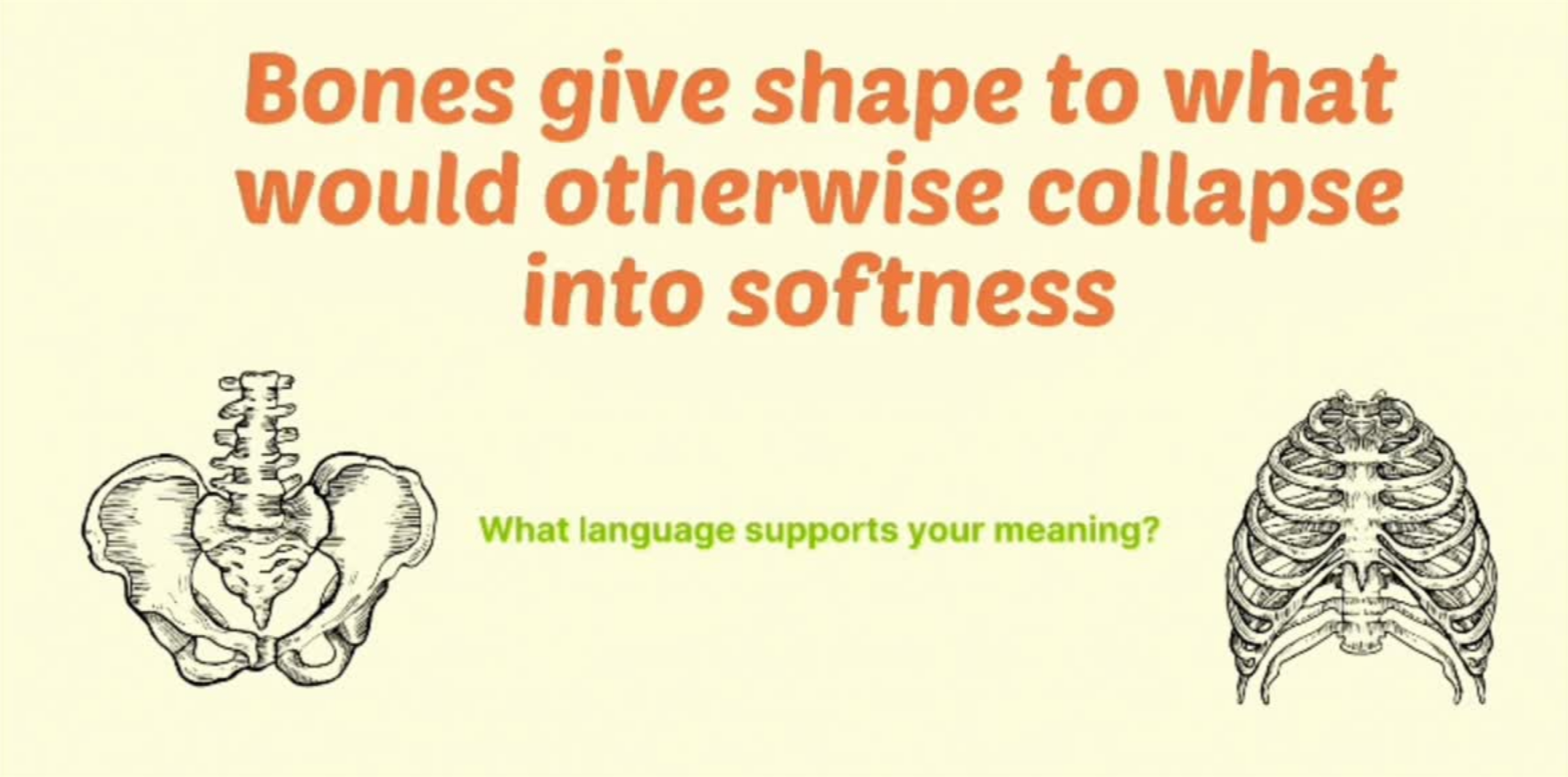
Beneath the skin lies the skeleton: the quiet architecture that holds the body upright. Bones give shape to what would otherwise collapse into softness. They are firm, enduring, and often hidden from view, yet everything we do depends on them. In a poem, bones can appear where the skin was torn or incomplete. They emerge in the spaces where language hesitated, where words could not yet be spoken. If skin is the fragile language that first touches the world, bones are the deeper structure that supports meaning. They fill the gaps, connect what was separated, and allow the body of the poem to stand.
Your Task (15 minutes)
- Think of a language that brings strength to your communication: Your crutches if you will. When things get tricky with your fragile language, which other language do you use? This language will be your bones. If you speak three or more languages, this language might not be your mother tongue, but a third common language. In my case where my mother tongue is Spanish, my fragile tongue is Icelandic, my bone language is English
- Fill in the gaps: Take a second piece of translucent paper and lay it on top of the previous one in such a way that you clearly see the poem underneath. Look at the poem and do one of the following two things:
-
- Rewrite the entire poem (following the same lines as the one underneath) in your bone language. Do not translate but rewrite. Allow the poem to become something slightly different or completely different.
- Fill in only the gaps of the previous poem with the bone language.
Reflection: How did the poem change as you filled in the gaps? How did it feel to write in your bone language? Were there any difference in the tension of your hand and your mind when doing this exercise? Feel free to read your poem out loud or in your mind. Is it comfortable or uncomfortable to read a poem that mixes these two specific languages?