
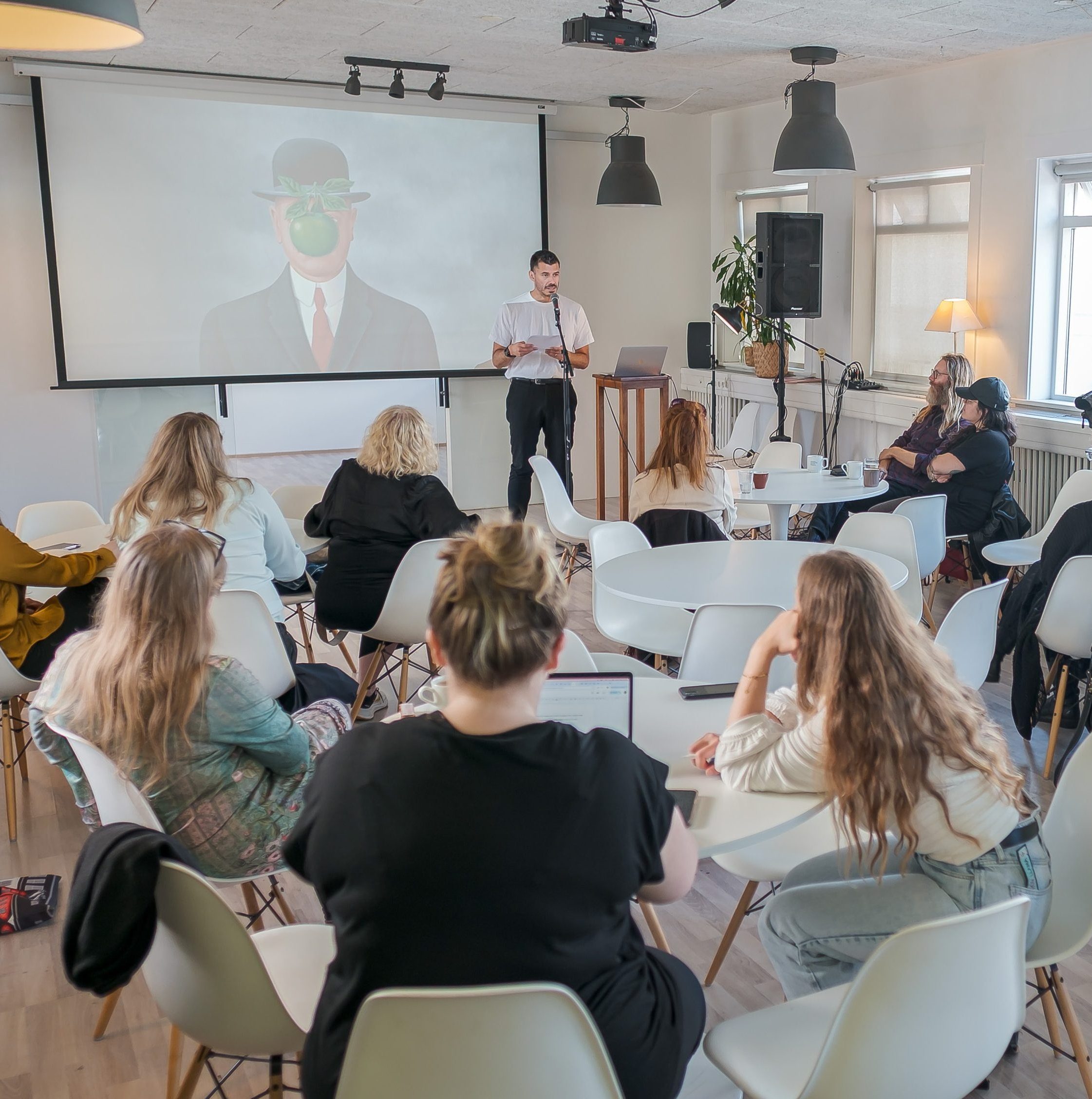

Let’s look back at the journey you’ve taken with four multilingual poets: Ewa Marcinek, Helen Hafgnýr Cova, Natasha S., and Francesca Cricelli.
Introduction to Multilingual Poetics:
📌 Multilingual poetics as a practice employs the use of multiple languages in creative writing, but going deeper, it also translates lived plurilingual experience that shapes how an author thinks, feels, and creates.
📌 Multilingual poetics is not always visible on the page. It often remains beneath the surface, emerging from deep personal experience and connection to language.
📌 We often forget how many languages we are exposed to throughout our lives. Some we speak fluently, some we only understand, and others come to us through family, travel, friendships, or work. Each of them shapes the way we experience the world.
📌 The way we perceive languages is rich, complex, and creatively charged. Even the same concept can evoke different sensations, images, and emotions depending on the language.
📌 In each language, a word takes on its own texture, flavour, and emotional resonance, shaped by culture, memory, and personal experience.
📌 Where there are emotions, there are stories. Pay attention to the emotions that arise when you learn a new word or focus on one you already know. It may be a sign that a story is hidden beneath it.
Roots and Echoes with Ewa Marcinek:
 Languages are flexible and evolving. They are an invitation for us, poets and writers, to play and experiment. Observe, stay curious, learn, and experiment.
Etymology is a great tool for deepening your connection with language and inspiring new writing. Stay curious about the meanings, origins, and journeys of words across languages and cultures.
Repetition can make words more powerful, creating an anchor within your text and evoking new meanings through rhythm. When words feel powerless, use repetition to create some fire.
Poetic Anatomy with Helen Hafgnýr Cova:
💡 Languages move and live within your body. Feeling them can sometimes be more enriching for your practice and connection with languages than trying to understand or conceptualise them.
💡 The gaps in our language fluency are not shortcomings to hide, but creative starting points — spaces that invite curiosity, experimentation, and new ways of expressing ourselves.
💡 Writing is also a physical act. Don’t forget your body! Pay attention to it while writing and use it as a tool to deepen your poetic practice.
💡 Your poetic practice is alive. Writing is a dynamic, layered, and continually evolving process.
The Weight of the Heritage with Natasha S.:
📝 Blending languages and working with linguistic differences opens new forms of artistic freedom. Pay attention, compare them, and use them in your practice.
📝 Switching languages is also a tool for controlling poetic distance. It can create a safer space between you and the subject, bring the reader closer, or keep them at a deliberate distance.
📝 Using visual poetry and photography can expand the meaning of your writing beyond the textual layer.
Between Languages with Francesca Cricelli:
🎯 Translation can serve as a poetic tool for developing your skills in writing and your artistic sensitivity, inviting deeper attention to language, sound, and meaning.
🎯 Any writing begins with translation. Before words appear on the page, we translate experiences, ideas, emotions, and memories into writing.
🎯 Linguistic boundaries are fluid. You can use all languages—even those you don’t know very well—to play with and construct new texts and poems.
🎯 Not-quite-understanding is not a failure; it is an opening. When we don’t fully grasp a word, we fill it with ourselves. That is where the poem begins.