Ecology of Memory: Transgenerational Ecopoetics in Multimedia

Wishlist Share

About Course

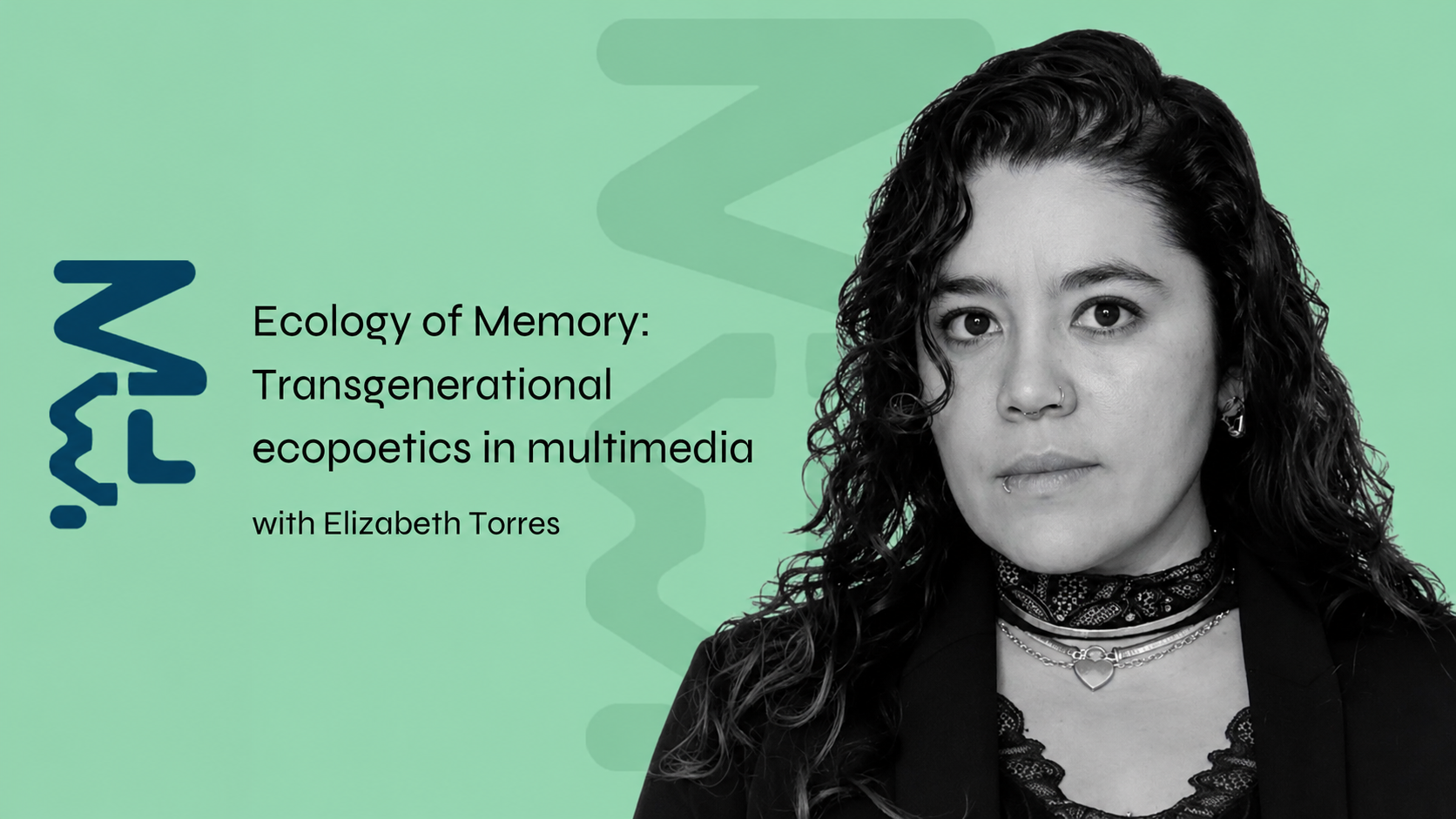
This six-week studio course invites poets, eco-artists, and interdisciplinary creatives to explore the profound relationship between environmental memory, transgenerational storytelling, and multimedia poetics. Designed for participants with a foundation in writing and an openness to experimentation, “Ecology of Memory” uses poetry as a primary method of inquiry into environmental justice, ecological grief, and ancestral connection —the course emphasizes transgenerational dialogues and ecological memory through multimedia expressions, and culminates in the creation of a thematic body of work Led by poet, translator, and multimedia artist Elizabeth Torres (Madam Neverstop), the course centers on five key creative phases: writing, sounding, visualizing (art), visualizing (video), and performance.

Drawing from environmental criticism, affect theory, and poetics of memory, the course emphasizes embodied, archival, and community-driven creation.

Each week focuses on a specific mode of expression, supported by theoretical readings, transgenerational conversations, local environment engagement, and artistic practice. Participants will produce a body of interdisciplinary work ready for public presentation, submission to literary journals, and/or inclusion in the Poetic Phonotheque archive.


Theoretical Framework

This course is grounded in the evolving field of the Environmental Humanities and second-wave ecocriticism (Buell, Heise, Alaimo), which emphasize socio-ecological entanglements, environmental justice, and the affective, lived experience of ecological crisis, as well as Fritjof Capra’s Principles of Life.

This course also draws from Tom Bristow’s lexicon of “Memory” (2014), each week aligning with one of the classical elements of poetics: Mimesis (representation), Ethos (character), Mythos (plot), Opsis (spectacle), Peripeteia (reversal), and Melos (melody).

Participants are invited to embody the archive, becoming living repositories of cultural and ecological memory. The course integrates oral history, acoustic ecology, eco-visuality, and ritual performance to honor both inherited knowledge and emergent creative forms.

Show More

Course Content

Week 1: Mimesis – INTRO
This week introduces mimesis as an ecological and affective method of representation. Rather than merely replicating nature, we engage with what Tom Bristow calls the "environmental humanities' poetics of relation" (Bristow, Living Lexicon), drawing from Lawrence Buell’s environmental imagination to explore how memory becomes an instrument of environmental continuity and care. Inspired by Fritjof Capra’s Principles of Life, mimesis is reframed here as an analog act—a poetic tool for transmitting both biological and emotional ecosystems across generations. We move away from linear history toward a web of living memory. Practices: • Nature journaling and oral history collection from elder relatives or community members. • Begin a Memory Lexicon based on intergenerational ecological recollections. • Workshop: “Where does my memory touch the land?” Exercise: Compose a poem or poetic map that interweaves ancestral land stories with personal sensory encounters. Highlight disappeared ecosystems or endangered places, and reflect on how poetic memory operates as a form of ecological resistance (Haraway, Staying with the Trouble). ‘M’imesis – imitation / representation Mimesis is an entirely holistic, analogue mode of communication in which “the world is apprehended as variation on continuous dimensions, rather than generated from discrete elements. It would be valuable for our natural history collections and cultural archives (owned, indexed and maintained by humans for humans) to sustain such an understanding and feeling of variation. Doing so would help us to recognize the complex ways in which human organisms and their environments are “mutually unfolded and enfolded structures” and are each recomposed in and through their exchanges. Moreover, our collecting institutions’ interpretative grids could be calibrated to the ways that “evolution demonstrates the mutability and malleability of biology as against its permanence. This approach would trigger environmental emotions, which could be harnessed by sensitive curation of the visitor experience.

Week 2: Melos – Sonic Landscapes / Resonant Bodies
Theme: The Poetics of Sound and the Affective Archive – Ecological Sensing Theoretical Focus: We shift from the visual to the auditory, asking how ecological memory is stored and transmitted through sound. Drawing on Gibbs’ claim that “emotional memory constitutes the largest part of our memory” and Angela Impey’s work on Sound, Memory, and Dis/Placement, we understand melos—following Bristow—as a rhythmic, embodied poetics. Sound becomes both archive and intervention. Sourcing inspiration from the archive of the Poetic Phonotheque offer models for how voice, ambient noise, and inherited melodies may act as rewilded testimony. Practices: • Field recording of local environmental sounds (streams, animals, machines, urban silence) • Story-circle: sharing intergenerational lullabies, songs, or sonic traditions • Readings and listening activities from various artists’ sound-based work and examples from the Poetic Phonotheque. Exercise: Create an eco-sonic collage or sound-poem combining voice, field recordings, and archival fragments. Explore affect and memory through resonance and rhythm, drawing from Freire’s Pedagogy of the Oppressed to understand listening as an act of relational pedagogy.

Week 3: Opsis – Rituals of Seeing
We turn to opsis—the spectacle—not as passive consumption but as a ritual act of ecological witnessing. Pierre Bourdieu’s notion of the pre-symbolic reminds us that before words or symbols intervene, the body apprehends the world through urgent, lived presence. Tom Bristow’s reflections on visual memory help us consider the Anthropocene as a theatre of both emergence and disappearance—where biodiversity, habitats, and cultural memory are simultaneously lost and reimagined. In this frame, image-making is neither neutral documentation nor aesthetic detachment. It becomes an embodied practice of testimony—an affective and political presence. We will work with Ana Mendieta’s earth-body works and Cecilia Vicuña’s visual poems, whose practices enact kinship, mourning, and re-emergence through ritualized seeing. Through their lens, we consider how the visual holds grief without immobilizing it, and how it can invite potential rather than closure. Donna Haraway’s provocation to “make kin” beyond genealogical lines pushes us to think of seeing as an act of relation-making, a means to compose care between kinds and assemblages. In this week’s work, vision is understood as interbeing: to look is also to touch, to acknowledge, and to enter into reciprocal presence.

Week 4: Mythos – Cinematic Memory / Poetic Time
Inspired by Bristow’s mythos and Buell’s idea of “re-plotting” nature from the personal to planetary, we explore poetic cinema as a way to re-narrate memory, myth, and environmental collapse. Through the lens of the Anthropocene as peripeteia—a reversal or rupture in narrative continuity—we consider how cinema enables the poetic reframing of personal and planetary records. Myth, memory, and environmental urgency intertwine in cinematic time.

Week 5: Ethos – Performance & Kinship Ethics
Ethos, as framed this week, refers to the ethical presence of the body in ecological relation. Drawing from Augusto Boal’s Aesthetics of the Oppressed and Yotam Shibolet’s Bodyminds in Movement, we view performance as both resistance and remembrance. This somatic archive carries ecological grief, ancestral gestures, and interspecies care. Through collaborative and solo movement practices, we interrogate how the body becomes a vessel of ecological knowledge.

Week 6: Peripeteia – Memory Futures / Regenerative Poetics – Conclusion
Peripeteia—drawn from Greek drama—marks the moment of narrative reversal. We apply this concept to memory: What happens when we turn memory forward? Using Bristow’s idea of memory-as-invention and Marcel Mauss’s notion of total history, participants curate past weeks’ works into a regenerative, transgenerational installation. The archive is not just a place of loss, but a proposition: a speculative offering to future kin.