
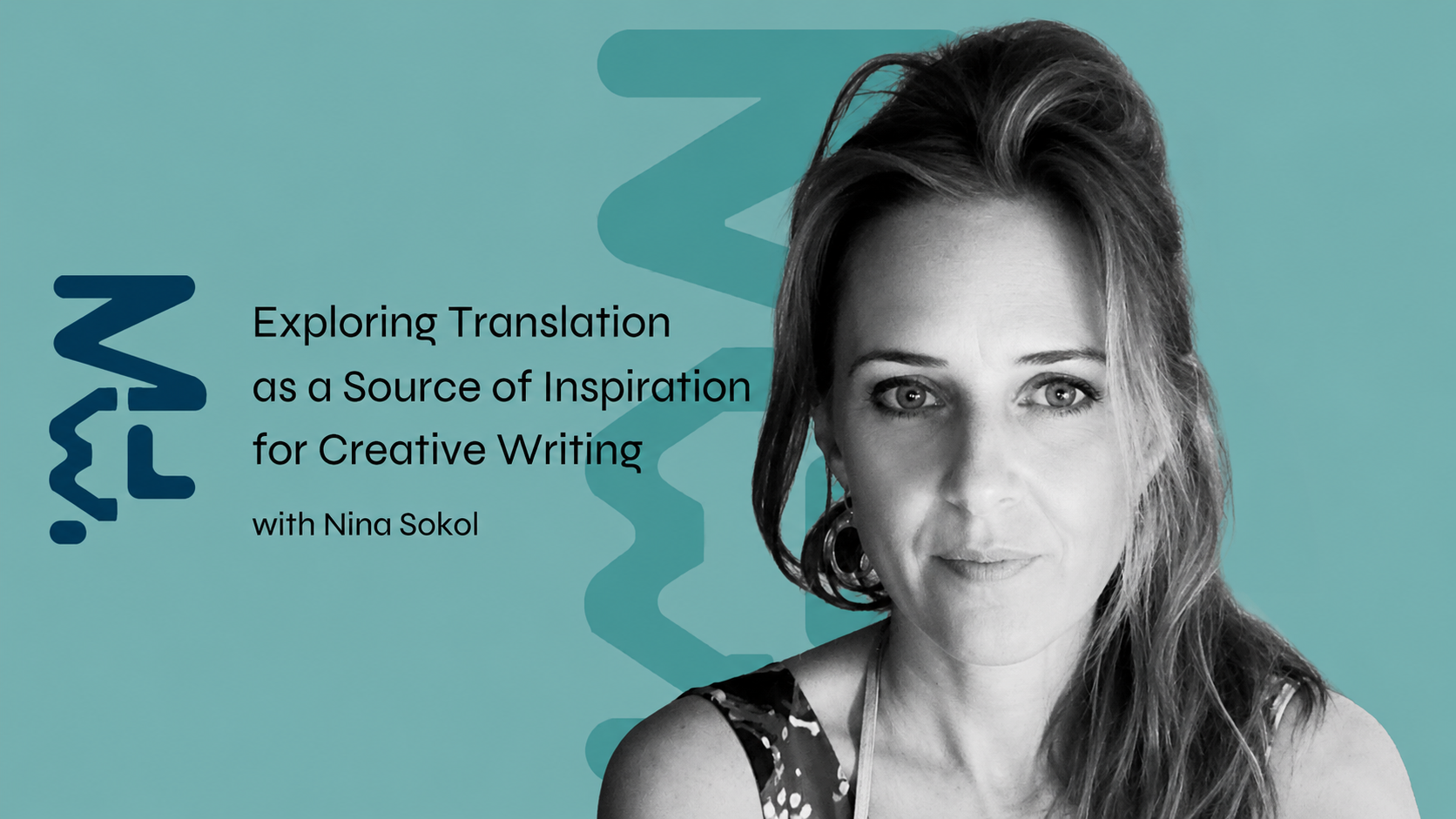
Experiencing Translation as a Source of Inspiration for Creative Writing

Wishlist Share

About Course

The course will explore how the art of translation can be used to  discover not only the writing techniques of selected authors (by translating and delving into their works and thus getting “behind” their words) but will also explore how translating one’s own work and, if possible, getting one’s work translated by another writer/participant can potentially highlight or bring forth aspects of one’s work that weren’t apparent before – it is an especially good way for writers struggling with writer’s block to continue working creatively while taking full advantage of their multilingual skills. 

Course Content

Week 1: Introduction
Traditionally, translation is seen as a means to transfer the language of a given manuscript (source text or ST) into another language (target text or TT). However, translation may also be seen as an art form in that the translator is, in the act of translating, actually producing a new literary text based on the original source text. It is also possible to take it a step further and, in fact, use translation as a source of inspiration to create new texts. In the course of the thirteen years that I have worked as a translator I have frequently caught myself discovering the literary techniques employed by the authors I have translated and I have thought about the fact that those techniques could potentially be a source of inspiration in my own writing. The beauty of translation is that you don't have to create a text to have something to work on, it's already written for you.

Week 2: Translation as Hyper-Reading
One could call translation a kind of hyper-reading, where you are not only interpreting the text of the author but you are actually forced to go behind the words, so to speak, and are forced to notice certain aspects of the text you probably wouldn't have had you just read it in the normal way, that is, without translating it. During the twelve years that I have worked as a professional translator, I have come to discover that there are, in fact, a number of details that become more apparent when translating a text, not only that, but the literary techniques used by the author also become apparent and I, as the translator, am forced to not only be aware of them but to also decide the extent to which I wish to use them or not. If I choose to use them, they may illuminate new and exciting ways of approaching writing, ones I had never considered before.

Week 3: History of Translation I
Like anything else when it comes to history, it is impossible to cover all the numerous significant works that have impacted world culture and litertaure throughout the ages in the course of just a few weeks, and so only a few select pieces have been chosen for this course, but it goes without saying that there are many, many more. So please bear in mind that the history of translation goes all the way back to Mesopotamia, the Egyptian scribes, The Septuagint, and the Buddhist Sutra translations, etc. Again, we will have to skip several centuries due to the nature of this course.

Week 4: History of Translation II
In the 16th century we see the question of domesticizing emerging in even more extreme forms – culminating in Martin Luther's translation of the Bible into vernacular German. Again, there were numerous other important translations, trends, schools and debates that took place during the prior centuries, but since this course is focusing mostly on the ways in which translation may be used as a form of creative writing, certain specific moments have been selected to illustrate relevant trends.

Week 5: Translation of Drama
In this week's class we'll focus on translating drama and the specific challenges associated with it. I have translated numerous Danish plays into English and have several perspectives I'd like to share, but first, let's start by considering the various approaches a translator faces when dealing with drama.

Week 6: Translation of Poetry
Probably one of the most difficult genres to translate is poetry. In his essay, ”Translating Poetry, Contemporary Theories and Hypotheses” Ovidiu Matin explains some of the challenges connected with it. For one thing, it is practically impossible to translate great poetry without compromising something because, as he writes, ”poetry is neither just words nor just meter. Translators and theoreticians characterize it as music of words [....] and of conveying to the listener a heightened awareness of [the world] through an intense concentration of metaphor and words in which the natural flow of speech sounds is molded to some kind of formal pattern.” Thus, he explains, translating poetry is bound to fail from the get go... let's get started!